
Programs for Troubled Teens: What Parents Need to Know Before Choosing

If your teenager is struggling with defiance, anxiety, depression, or risky behavior, you’re not alone — and you’re not out of options. Thousands of parents across North Carolina and beyond find themselves searching for programs for troubled teens, hoping to find something that actually works. The challenge isn’t a lack of programs. It’s knowing which ones deliver real, lasting change — and which ones can make things worse.
This guide breaks down every major type of program available, the research behind what actually helps troubled teenagers, and how to make a confident decision for your family. Whether you’re in Wake Forest, Raleigh, or anywhere in NC, you’ll walk away knowing exactly what to look for and what to avoid.
Understanding the Crisis — Why More Teens Are Struggling
The numbers paint a stark picture. According to the CDC’s youth mental health data, 40% of high school students report persistent feelings of sadness or hopelessness. Nearly one in three teens (31.9%) has a diagnosed anxiety disorder, and 20% will experience a major depressive episode before they turn 17.
These aren’t abstract statistics. They show up as failing grades, explosive arguments at home, social withdrawal, substance use, and self-harm. And for most families, the crisis doesn’t arrive with a clear instruction manual.
What’s Driving the Surge
Several factors are converging to make adolescence harder than it’s ever been:
- Social media overload — The average teen spends 4.8 hours per day on social media, exposing them to constant comparison, cyberbullying, and disrupted sleep patterns.
- Post-pandemic fallout — Years of isolation, disrupted schooling, and family stress left lasting psychological wounds that many teens are still processing in 2026.
- Academic pressure — The college admissions race and academic expectations create chronic stress that compounds existing mental health vulnerabilities.
The Treatment Gap
Perhaps the most alarming finding: according to the Annie E. Casey Foundation, only 19-20% of teens with depression receive adequate care. That means 4 out of 5 struggling teenagers aren’t getting the help they need. The gap isn’t always about access — it’s often about parents not knowing where to turn or which programs actually produce results.
Types of Programs for Troubled Teens
Not every struggling teen needs the same level of intervention. Programs for troubled teens range from weekly outpatient sessions to full residential placements. Understanding the spectrum helps you match the right program to your teen’s specific situation.
Outpatient Therapy and Intensive Outpatient Programs (IOPs)
This is typically the first line of treatment. Your teen attends therapy sessions — individual, group, or both — while continuing to live at home and attend school. IOPs offer a more structured schedule (usually 9-12 hours per week) without removing the teen from their daily environment.
Best for: Teens with mild to moderate issues who have a stable home environment and are willing to engage in treatment.
Therapeutic Mentoring and Life Coaching
Therapeutic mentoring pairs your teen with a trained mentor who builds a genuine relationship while teaching practical life skills, coping strategies, and emotional regulation. Unlike traditional therapy, mentoring happens in real-world settings — not just an office.
This is the model that Sherpa Group uses in Wake Forest and Raleigh. It combines evidence-based therapeutic techniques with the relational power of mentoring, meeting teens where they are — literally and figuratively.
Best for: Teens who resist traditional therapy, need accountability and relationship-based support, or are transitioning out of more intensive treatment.
Wilderness Therapy Programs
These programs take teens into outdoor settings for weeks or months, combining physical challenge with group therapy and individual counseling. The idea is that removing teens from their environment and comfort zones creates breakthroughs.
Best for: Teens who need a significant pattern interrupt and respond to experiential learning. Typically 8-12 weeks, with costs ranging from $15,000 to $40,000+.
Therapeutic Boarding Schools
These are full-time residential schools that blend academics with structured therapy. Teens live on campus, attend classes, and participate in daily therapeutic programming.
Best for: Teens who need long-term structure and cannot function safely in their current school environment. Programs run 12-18 months and cost $40,000-$100,000+ per year.
Residential Treatment Centers (RTCs)
RTCs provide the highest level of care outside of hospitalization. Teens live at the facility full-time and receive intensive clinical treatment for serious mental health disorders, substance abuse, or behavioral issues.
Best for: Teens in crisis with severe mental health diagnoses or safety concerns. Typical stays are 6-12 months, with costs of $10,000-$30,000+ per month.
Boot Camps and Scared Straight Programs
These are the programs many desperate parents Google first — “bootcamp for troubled teens” or “scared straight programs near me.” They use military-style discipline, physical punishment, or fear-based confrontation to try to shock teens into compliance.
The evidence is clear: these programs don’t work. We’ll break down why in the next section.
Do Boot Camps for Troubled Teens Actually Work?
The short answer is no. The long answer is that they often make things worse.
A landmark study from the University of Washington found that boot camp programs cost nearly five times more than Multisystemic Therapy (MST) — a proven community-based approach — while producing no significant reduction in criminal behavior or recidivism.
The research compiled by Empowering Parents reinforces this: boot camps and scared straight programs rely on intimidation and punishment, which may produce short-term compliance but fail to address the underlying issues driving a teen’s behavior.
Why Fear-Based Programs Backfire
- They don’t teach coping skills. Yelling at a teen with anxiety doesn’t teach them how to manage anxiety.
- They damage trust. Teens who feel betrayed by being sent away often become more guarded and resistant to future help.
- They ignore root causes. Defiance, substance use, and acting out are symptoms. Boot camps target symptoms while leaving the underlying trauma, depression, or family dysfunction untouched.
- They can cause harm. Reports of abuse, neglect, and PTSD from boot camp-style programs are well-documented.
What the Research Says Works Instead
The National Institute of Justice identifies Cognitive Behavioral Therapy (CBT) approaches as the most effective framework for changing adolescent behavior. Programs that combine CBT with family involvement, real-world skill building, and community-based support consistently outperform punitive models.
This is exactly why Sherpa Group’s therapeutic mentoring and life coaching approach in Wake Forest focuses on building skills, strengthening relationships, and addressing root causes — not punishment.
What to Look for Before Choosing a Program
With so many options — and so much money at stake — choosing the right program for your troubled teenager requires careful evaluation. Here’s a checklist of what matters most.
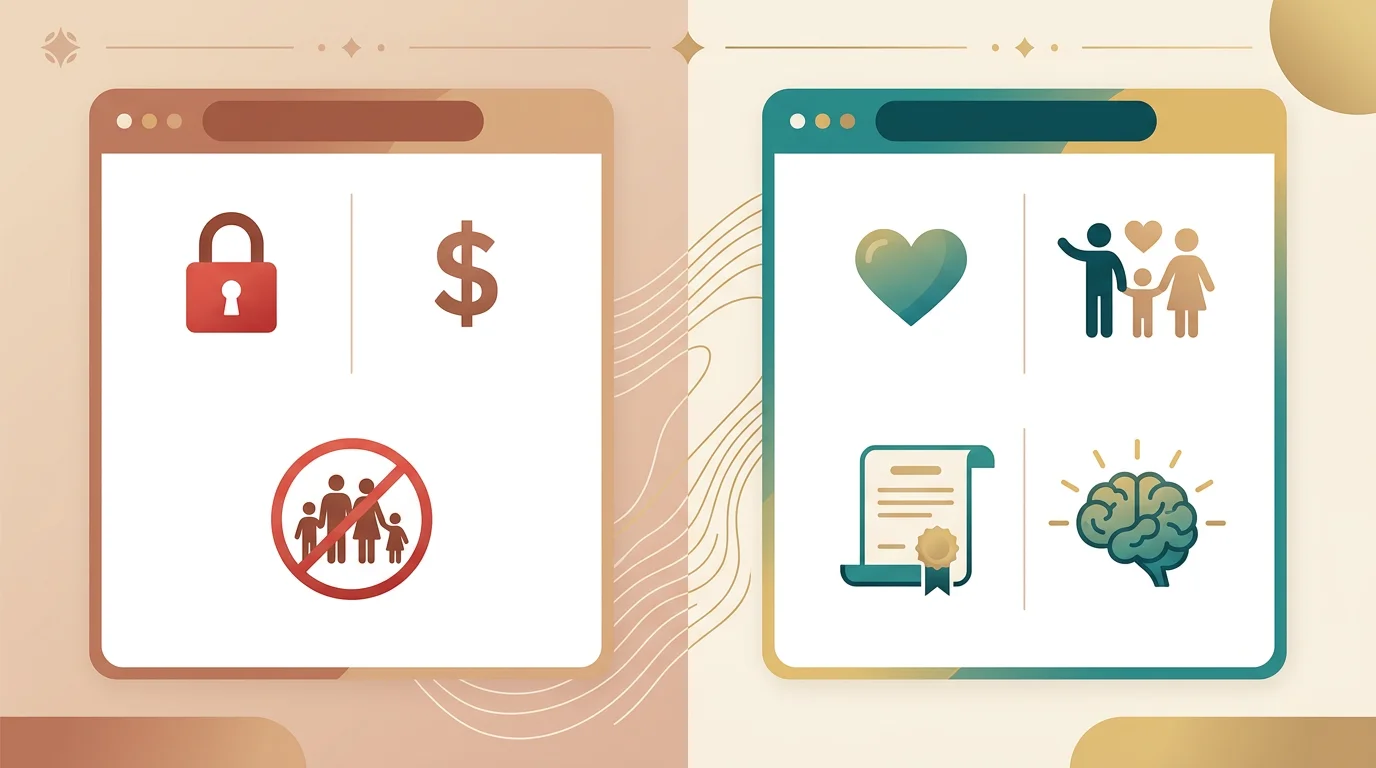
Accreditation and Licensing
Any legitimate program should be licensed by the state and accredited by a recognized body (such as CARF, the Joint Commission, or a state behavioral health authority). In North Carolina, verify licensing through the NC Department of Health and Human Services. If a program can’t provide proof of accreditation, walk away.
Evidence-Based Therapies
Look for programs that use proven therapeutic modalities:
- Cognitive Behavioral Therapy (CBT) — The gold standard for anxiety, depression, and behavioral issues
- Dialectical Behavior Therapy (DBT) — Especially effective for emotional dysregulation and self-harm
- Family Systems Therapy — Addresses the family dynamics that often contribute to a teen’s struggles
- Motivational Interviewing — Helps teens who are resistant to change find their own reasons to engage
Individualized Treatment Plans
Your teen is not a number. Effective programs create a customized treatment plan based on a thorough intake assessment — not a one-size-fits-all curriculum. Ask how the program tailors its approach to each teen’s specific needs, strengths, and challenges.
Staff Credentials and Ratios
Who’s actually working with your teen? Look for licensed therapists (LPC, LCSW, PhD), certified mentors, and trained support staff. Ask about staff-to-client ratios — lower is better. A program where one counselor oversees 20 teens is fundamentally different from one with a 1:4 ratio.
Family Involvement
Research consistently shows that programs with a strong family counseling and parent coaching component produce better long-term outcomes. If a program sends your teen away and asks you to step back entirely, that’s a red flag. The family system needs to change alongside the teen.
Aftercare and Transition Planning
What happens when the program ends? The transition back to everyday life is where many teens relapse. Strong programs build an aftercare plan that includes ongoing support, relapse prevention strategies, and a clear step-down process.
Program Length
Research suggests that a minimum of 30-45 days is needed for meaningful behavioral change to take root. Programs shorter than that rarely produce lasting results. For more complex issues, 90 days or longer may be necessary.
Programs for Troubled Teens in North Carolina
If you’re searching for “troubled teen programs near me” from the Raleigh or Wake Forest area, you have more options than you might think — and staying local may be the smartest choice you can make.
Why Local, Community-Based Programs Outperform Send-Away Options
A growing body of research, including findings from Frontiers in Public Health, shows that community-based interventions produce outcomes equal to or better than residential placements — at a fraction of the cost. Here’s why:
- Teens stay connected to their support network. Friends, teachers, coaches, and family members who care about your teen remain part of the recovery process.
- Skills transfer to real life. Practicing coping strategies in the environment where your teen actually lives is more effective than learning them in an artificial setting.
- Family involvement is built in. When your teen comes home every day (or stays local), family sessions and parent coaching happen naturally.
- The transition problem disappears. There’s no jarring re-entry when treatment happens in the community.
Sherpa Group’s Approach in Wake Forest and Raleigh
Sherpa Group, based in Wake Forest, NC, takes a therapeutic mentoring approach that keeps teens rooted in their community while delivering intensive, evidence-based support. Rather than removing teens from their environment, Sherpa’s mentors work with them in real-world settings — building skills, strengthening relationships, and addressing the root causes of behavioral challenges.
This model is particularly effective for troubled teen programs in NC because it combines the intensity of a structured program with the flexibility of community-based care. Teens continue attending school, maintain healthy relationships, and practice new skills in real time — with a trained mentor guiding them every step of the way.
North Carolina Resources
In addition to programs like Sherpa Group, Wake County and the greater Raleigh area offer several support resources for families:
- NAMI Wake County — Free support groups, education programs, and crisis resources for families dealing with teen mental health challenges.
- Wake County Crisis Services — 24/7 crisis line and mobile crisis teams for immediate safety concerns.
- NC school-based mental health programs — Many Wake County schools offer on-site counseling and referral services.

How to Talk to Your Teen About Getting Help
Finding the right program is only half the battle. Getting your teen on board is the other half. Forced treatment rarely works as well as treatment a teen willingly engages in. Here’s how to approach the conversation.
Normalize the Conversation
Frame getting help as a sign of strength, not weakness. You might say: “Everyone needs support sometimes. I’ve noticed things have been really hard for you lately, and I want to make sure you have the right tools to handle it.”
Avoid accusatory language. “You need to fix your behavior” puts a teen on the defensive. “I’m worried about you and I want to help” opens a door.
Involve Them in the Decision
Teens who feel like they have a say in their treatment are far more likely to engage. Present options rather than ultimatums. Let them meet a potential mentor or therapist before committing. Give them as much autonomy as the situation safely allows.
Set Realistic Expectations
Change doesn’t happen overnight. Let your teen know that the goal isn’t perfection — it’s progress. There will be hard days. There will be setbacks. What matters is having the right support system in place to keep moving forward.
Be honest about your own role, too. Family dynamics are part of the equation, and your willingness to participate in the process sends a powerful message.
Frequently Asked Questions
What are the different types of programs for troubled teens?
The main types include outpatient therapy, intensive outpatient programs (IOPs), therapeutic mentoring, wilderness therapy, therapeutic boarding schools, residential treatment centers, and boot camp-style programs. The right choice depends on the severity of your teen’s challenges and your family’s circumstances.
Are boot camps effective for troubled teenagers?
No. Research consistently shows that boot camps and scared straight programs do not produce lasting behavioral change. A University of Washington study found they cost nearly five times more than evidence-based alternatives with no significant improvement in outcomes. Programs built on CBT and mentoring are far more effective.
How much do programs for troubled teens cost?
Costs vary dramatically. Outpatient therapy runs $100-$250 per session. Therapeutic mentoring programs typically cost $2,000-$5,000 per month. Wilderness therapy ranges from $15,000-$40,000+ for a full program. Residential treatment centers can exceed $10,000-$30,000 per month. Community-based options like those in Wake Forest and Raleigh often provide the best value for outcomes.
Are there free programs for troubled youth?
Some options exist. NAMI Wake County offers free support groups and educational programs. Medicaid and NC Health Choice cover many behavioral health services for qualifying families. School-based counseling is available at no cost. Contact your county’s mental health department for a full list of subsidized services in the Raleigh area.
What should I look for when choosing a program for my teen?
Prioritize these factors: state licensing and accreditation, use of evidence-based therapies (CBT, DBT), individualized treatment plans, qualified staff with proper credentials, family involvement components, aftercare planning, and a program length of at least 30-45 days.
How do I know if my teenager needs a program or just therapy?
Consider a structured program if your teen’s issues are affecting multiple areas of life (school, relationships, home), if weekly therapy hasn’t been enough, if there are safety concerns (self-harm, substance use, aggression), or if your teen is refusing to engage in traditional therapy. A professional assessment can help determine the right level of care.
What are the best troubled teen programs in North Carolina?
North Carolina offers a range of options from community-based therapeutic mentoring programs in the Wake Forest and Raleigh area to residential facilities across the state. The best program depends on your teen’s specific needs. Community-based programs that keep teens in their environment and school while providing intensive support tend to produce the strongest long-term outcomes.
How long do troubled teen programs typically last?
Program length varies by type. Outpatient therapy is ongoing. Therapeutic mentoring programs typically run 3-6 months or longer. Wilderness programs last 8-12 weeks. Therapeutic boarding schools run 12-18 months. Residential treatment averages 6-12 months. Research indicates that at least 30-45 days of structured intervention is needed for sustainable change.
Taking the First Step
Searching for programs for troubled teens is hard. It means acknowledging that your family is going through something difficult — and that takes courage. But the fact that you’re researching, reading, and looking for answers means you’re already doing the right thing.
Here’s what we know: evidence-based, community-centered programs that focus on building skills, strengthening family relationships, and addressing root causes consistently produce the best outcomes. Punitive approaches don’t work. Keeping your teen connected to their community, school, and support network matters.
If you’re in Wake Forest, Raleigh, or anywhere in North Carolina and want to explore whether therapeutic mentoring is the right fit for your teen, reach out to Sherpa Group. A conversation costs nothing — and it could be the turning point your family needs.