
Therapeutic Mentoring & Life Coaching: Practical Alternatives for Young Adults Who Feel Stuck
A growing number of young adults are finding the step into independence harder than expected — staying dependent on family, low on motivation, or unsure where to start. While traditional therapy helps many people, it can miss the hands-on coaching and skill-building that some emerging adults need. Below we outline where conventional approaches fall short, the warning signs parents should watch for, and practical alternatives like therapeutic mentoring and life coaching that focus on skills, structure, and momentum. With clearer options, caregivers can better support young people toward independence and purpose.
Where traditional therapy can miss the mark for young adults
Traditional therapy excels at processing feelings and healing past wounds, but it sometimes struggles with the specific needs of emerging adults. Clinicians who aren’t familiar with this developmental stage may lean heavily on talk-based approaches and less on concrete, skill-focused interventions. That gap can leave young people without the practical tools to move forward.
Why talk therapy sometimes doesn’t solve “failure to launch”
“Failure to launch” describes young adults who have difficulty becoming self-sufficient. Talk therapy often centers on insight and reflection, which is important — but it may not give clear steps for building routines, managing money, or finding motivation. Many young adults benefit from goal-oriented coaching that pairs emotional work with real-world skills.
How executive dysfunction and low motivation affect outcomes
Executive dysfunction — trouble planning, organizing, and completing tasks — can block progress in any treatment. If a young person also lacks drive, they may miss sessions, avoid homework, or struggle to apply what they learn. Effective plans account for these cognitive and motivational barriers with practical supports and accountability.
The connection between executive function challenges and stalled independence is well documented and worth considering when planning support.
Executive dysfunction and stalled independence
Executive dysfunction is a common contributor to stagnation. Difficulties with planning, organization, time management, and problem-solving can keep young adults from taking the small but necessary steps toward independence. Interventions that target executive skills focus on the concrete abilities required for everyday functioning.
Failure to Launch Syndrome: A Complete Parent's Guide to Understanding and Helping Your Adult Child
How to spot when your young adult is struggling with independence and motivation
Early recognition makes it easier to intervene effectively. Signs to watch for include little interest in work or school, trouble handling daily responsibilities, and heavy reliance on parents for decisions. Noticing these patterns lets families find the right mix of support sooner.
Practical signs of “failure to launch” in emerging adults
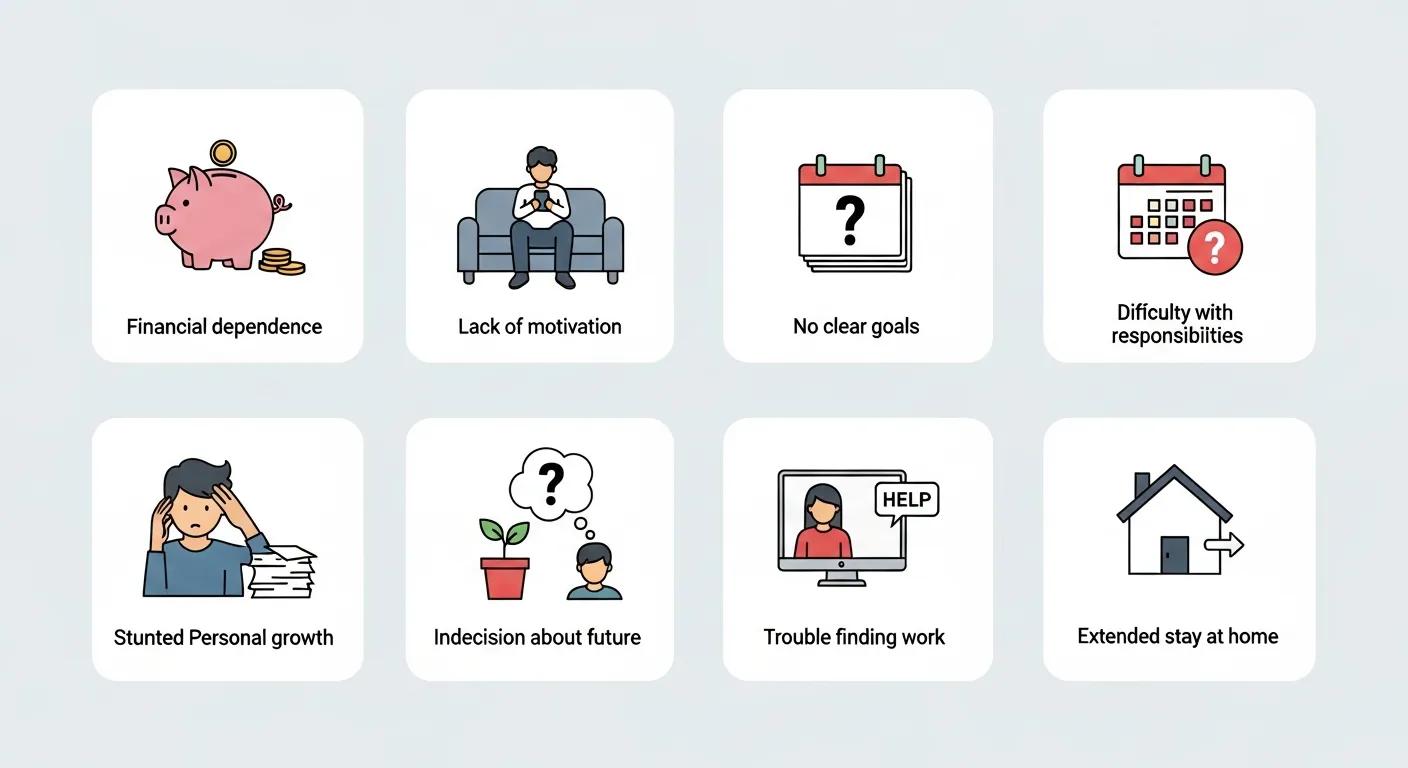
You can use a simple checklist to clarify what’s happening:
- Ongoing dependency : Remaining at home without contributing to bills, chores, or planning for the future.
- Avoiding responsibilities : Putting off job searches, classes, or basic adult tasks.
- Social withdrawal : Pulling away from friends and family and losing supportive connections.
These behaviors can signal that a young adult would benefit from targeted, consistent support.
Where anxiety and depression fit into the picture
Anxiety and depression are common among emerging adults and can sap energy, focus, and hope. Those conditions often underlie avoidance and withdrawal, so treating them — alongside building practical skills — is essential for restoring motivation and functioning.
How therapeutic mentoring and coaching help young adults who lack motivation
Therapeutic mentoring and life coaching provide practical, goal-focused support that complements therapy. They emphasize skill-building, accountability, and small wins — helping young adults move from stuck to steadily progressing.
What therapeutic mentoring looks like — and how it differs from therapy
Therapeutic mentoring takes a hands-on, skill-based approach. Mentors meet young people where they are, help set manageable goals, teach daily living skills, and offer steady accountability. Unlike therapy, which focuses primarily on emotional processing, mentoring pairs emotional insight with concrete, day-to-day guidance.
Evidence shows mentoring programs can produce measurable gains in self-awareness, resilience, and hope among youth.
Therapeutic mentoring for at-risk and at-promise youth
Mental health interventions that combine mentoring and counseling can help young people who are not reaching their potential. In one study of a 12-week therapeutic mentoring program, participants described improvements in self-awareness, trust, adaptability, resilience, and outlook for the future. Pairing mentoring with access to counseling supported sustained growth.
Perceptions of At-Promise Youth in a Therapeutic Youth Mentoring Program., DM Stutey, 2022
How life coaching builds skills, focus, and purpose
Life coaching centers on clarifying goals, identifying strengths, and creating actionable plans. Coaches guide young adults through step-by-step strategies — from daily routines to career exploration — so progress feels manageable and meaningful. That structure can restore momentum for those who feel lost or unmotivated.
Coaching-based support is also linked with gains in psychological independence and self-esteem among adolescents.
Coaching and adolescent psychological independence
Rising rates of social maladjustment among adolescents may relate to conflicts around psychological independence. Research examining coaching-based support found links among coaching, higher self-esteem, and stronger psychological independence — factors that help prevent and treat social adjustment difficulties.
Factors influencing psychological independence in adolescents and their relationship to coaching-based support from significant others, 2021
The Sherpa Group provides licensed mental health care alongside therapeutic mentoring and coaching designed for teens and young adults — services aimed at helping young people build skills, overcome obstacles, and reach their goals.
How family counseling and parent coaching improve outcomes for stuck young adults
Family patterns and expectations shape a young person’s progress. Engaging the whole family through counseling and parent coaching creates clearer boundaries, stronger communication, and coordinated support — all of which improve outcomes.
Why a whole-family approach matters
A whole-family approach recognizes that change happens inside a system. When family members learn new ways to support independence — while reducing enabling behaviors — the young adult has a safer environment to practice new skills and take on responsibility.
How parents can set boundaries and encourage growth
Parents play a key role in promoting independence. Helpful strategies include:
- Encouraging responsibility: Assign clear, age-appropriate tasks to build accountability.
- Open communication: Keep conversations about goals, limits, and next steps calm and consistent.
- Providing support without enabling: Offer guidance and resources while expecting effort and contribution.
When families combine firm boundaries with compassionate support, young adults gain the space they need to learn and grow.
What the Sherpa Group’s "Art of Living" framework offers families
The Sherpa Group’s "Art of Living" organizes support into practical domains that address the common stumbling blocks young adults face. It’s a straightforward roadmap families can use to structure growth.
How TIME, TRIBE, ACTION, and ATTITUDE work together
The framework centers on four complementary elements:
- TIME : Building time management, routines, and prioritization skills.
- TRIBE : Strengthening social supports and healthy relationships.
- ACTION : Turning goals into repeatable, achievable steps.
- ATTITUDE : Developing resilience, perspective, and a growth mindset.
Together these elements create a practical support system that helps young adults make steady progress.
Real outcomes — what success looks like
Families report that the framework helps young people find direction, build daily skills, and regain motivation. Those tangible improvements — better routines, clearer goals, stronger relationships — are the kinds of outcomes we aim for with tailored support.
How integrative health services extend care beyond therapy
Integrative health services complement mental health care by addressing physical wellness, stress, and lifestyle factors that affect mood and functioning.
The mind-body connection in holistic wellness for emerging adults

Mental and physical health are tightly linked. Integrative services such as mindfulness practice, movement, and nutrition counseling help stabilize mood, increase energy, and support the skills learned in therapy and coaching.
How nutrition, movement, and stress management build resilience
Small, consistent health habits reinforce mental resilience. Effective strategies include:
- Balanced diet : Eating nutrient-dense foods that support brain function and steady energy.
- Regular exercise : Moving regularly to lift mood, improve sleep, and reduce anxiety.
- Stress-management practices : Using mindfulness, breathwork, or relaxation techniques to rebalance under pressure.
When these practices are paired with therapy or coaching, young adults are better equipped to handle daily demands and setbacks.
To learn how The Sherpa Group can partner with your family or to ask about specific programs, please contact us today.
Frequently Asked Questions
What practical steps can parents take to support their young adult?
Start with clear, calm conversations about expectations and next steps. Set consistent boundaries that encourage responsibility, and offer structured supports (like coaching or mentoring) rather than rescuing. Consider family counseling if communication or patterns of enabling are getting in the way of progress.
How can group therapy or support groups help young adults?
Group settings reduce isolation and normalize the struggles many young people face. They offer peer feedback, shared strategies, and accountability — all of which can boost motivation and make change feel more achievable alongside individual therapy or coaching.
What role does self-care play in a young adult’s development?
Self-care is foundational. Regular sleep, movement, meaningful activity, and small rituals that reduce stress give young adults the stability they need to engage in learning and growth. When self-care becomes routine, it supports mood, focus, and confidence.
How can a young adult discover their strengths and interests?
Encourage exploration through short, low-risk experiences: volunteer work, classes, internships, or hobby groups. Reflection exercises like journaling and feedback from trusted mentors or coaches can help translate those experiences into clearer direction.
Why include physical activity in mental health plans?
Exercise reliably improves mood, sleep, and cognitive function. It also creates regular structure and opportunities for social connection — a powerful combination when rebuilding motivation and daily routines.
What are concrete ways to improve time management?
Break tasks into small, measurable steps. Use planners, calendars, or apps to schedule specific blocks of time. Build routine by repeating short, focused work periods and reviewing progress weekly to adjust priorities.
Conclusion
For many young adults, adding practical supports — therapeutic mentoring, life coaching, family coaching, and integrative health — makes the difference between stuck and steadily moving forward. These approaches pair emotional work with clear skills, routines, and accountability so change becomes sustainable. Explore The Sherpa Group’s tailored services to find the mix of care that fits your family’s needs.