
Family Counseling Raleigh: When Your Teen’s Struggles Become a Family Crisis
It starts with a slammed door. Then the silent dinners. Then the argument between you and your spouse at midnight about whether to push harder or back off. Your 15-year-old is struggling — maybe with anxiety, maybe with grades, maybe with something you can’t even name — and somehow the whole house has reorganized itself around the crisis. If you’ve been searching for family counseling Raleigh families actually find helpful, you’re not alone, and you’re not overreacting.
What you’re living through isn’t a parenting failure. It’s a family system under pressure. And it deserves more than a quick fix.
At Sherpa Group in Wake Forest, we work with families across the Raleigh area who are exactly where you are right now — exhausted, scared, and not sure what the next right step looks like. This article is for you.
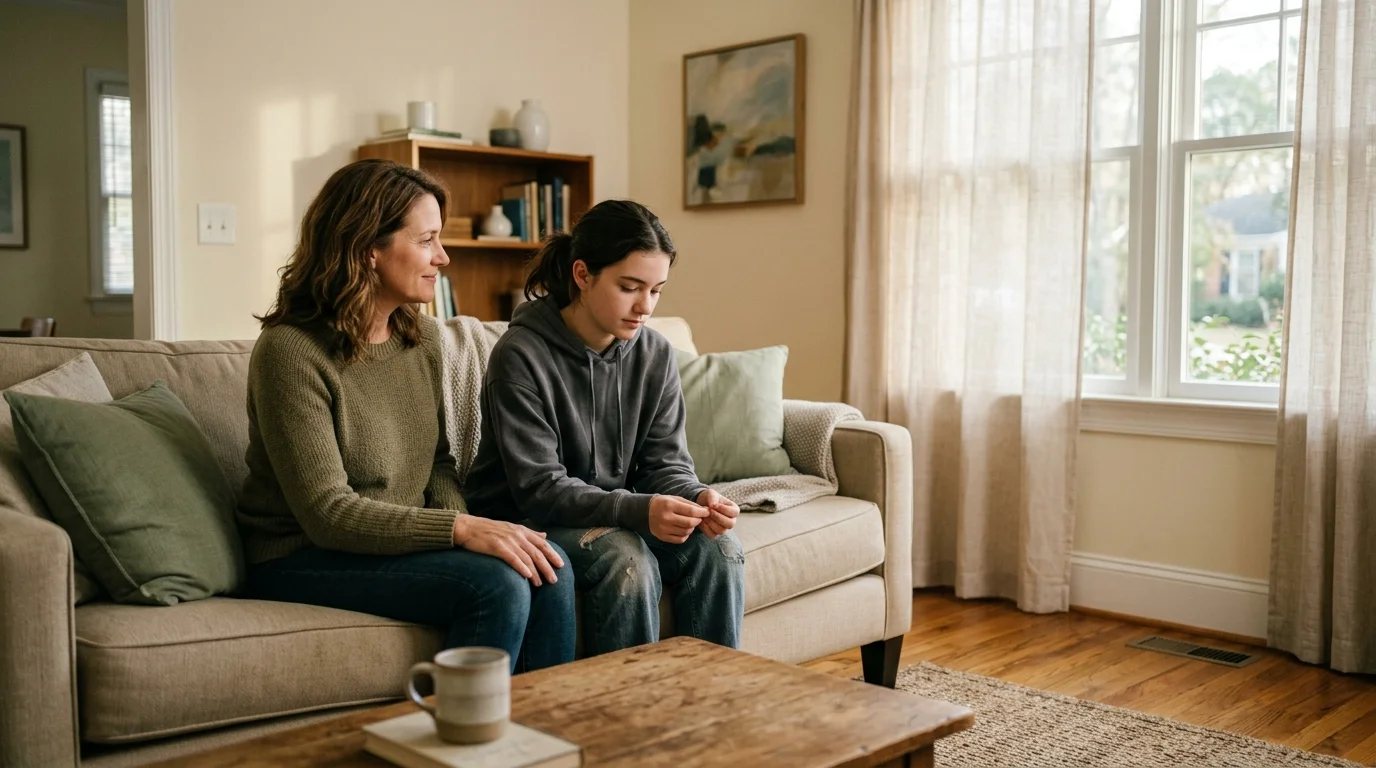
When Your Teen’s Struggles Become the Whole Family’s Crisis
There’s a moment most parents can point to. A phone call from the school counselor. A text you weren’t supposed to see. A night in the ER. Or something quieter — realizing you haven’t heard your teenager laugh in months.
Whatever that moment was, you probably hoped it would stay contained. That it was just a phase, or just your teen’s problem to work through. But mental health struggles in adolescence rarely stay in one room.
How One Teen’s Pain Spreads Through the House
When a teenager is in crisis, the whole family reorganizes around it. Parents start walking on eggshells. Siblings feel invisible — or act out to compete for attention. Marriages get strained because two exhausted people with different instincts are trying to parent the same impossible situation.
The teen, meanwhile, watches all of it. And often carries the guilt of knowing they’re the reason everyone is suffering. That guilt, layered on top of whatever they were already struggling with, makes everything harder.
This is the cycle that family therapy is specifically designed to interrupt.
The Triangle No One Talks About
Therapists sometimes describe a pattern called “triangulation” — where the family’s tension gets routed through the teenager. Mom and Dad avoid their own conflict by focusing all their energy on their child’s problems. The teen unconsciously stays in crisis because, on some level, it’s keeping the family together.
This isn’t anyone’s fault. It’s how families work. But it means that treating only the teenager often isn’t enough — because the system around them hasn’t changed.
According to the CDC’s 2024 National Health Statistics Report, only 58.5% of teenagers report always or usually receiving emotional support from their families. That gap — between teens who need support and families who don’t know how to provide it — is exactly where family therapy lives.
Why Individual Teen Therapy Sometimes Isn’t Enough
Individual therapy for teenagers is valuable. A good therapist gives your teen a confidential space to process things they can’t say at home, build coping skills, and feel genuinely seen. We believe in it.
But for certain struggles, individual therapy alone has real limitations.
When the Research Points to Family Involvement
The clinical evidence is clear: family therapy outperforms individual therapy for several of the most serious adolescent challenges. These include:
- Conduct disorder and oppositional behavior — where the relationship patterns at home are often driving the behavior
- Substance use — where family dynamics frequently maintain the problem
- Eating disorders — where family involvement in treatment dramatically improves outcomes
- Self-harm and suicidal ideation — where disconnection from family is often a core risk factor
A 2025 meta-analysis on Attachment-Based Family Therapy (ABFT) found that this approach significantly reduces suicidal ideation in adolescents — specifically because it rebuilds the relational trust between teens and parents that suicidality tends to erode. The National Institute of Mental Health emphasizes that early, comprehensive intervention — including family involvement — produces the best long-term outcomes for adolescent mental health.
The Limits of the “Drop-Off” Model
Many families operate on what we call the “drop-off” model of teen therapy: you bring your teenager to their appointment, wait in the lobby, and hope things get better at home. Sometimes they do.
But if your teen comes home from therapy and walks back into the same dynamic — the same communication patterns, the same triggers, the same unspoken rules — the work has nowhere to land.
Individual teen therapy changes the teenager. Family therapy changes the environment they’re healing inside of.
Our teen therapy services pair beautifully with family sessions for exactly this reason. Your teenager gets their own private work. The family gets to do its own work together. Both tracks reinforce each other.

What Family Counseling in Raleigh Actually Looks Like
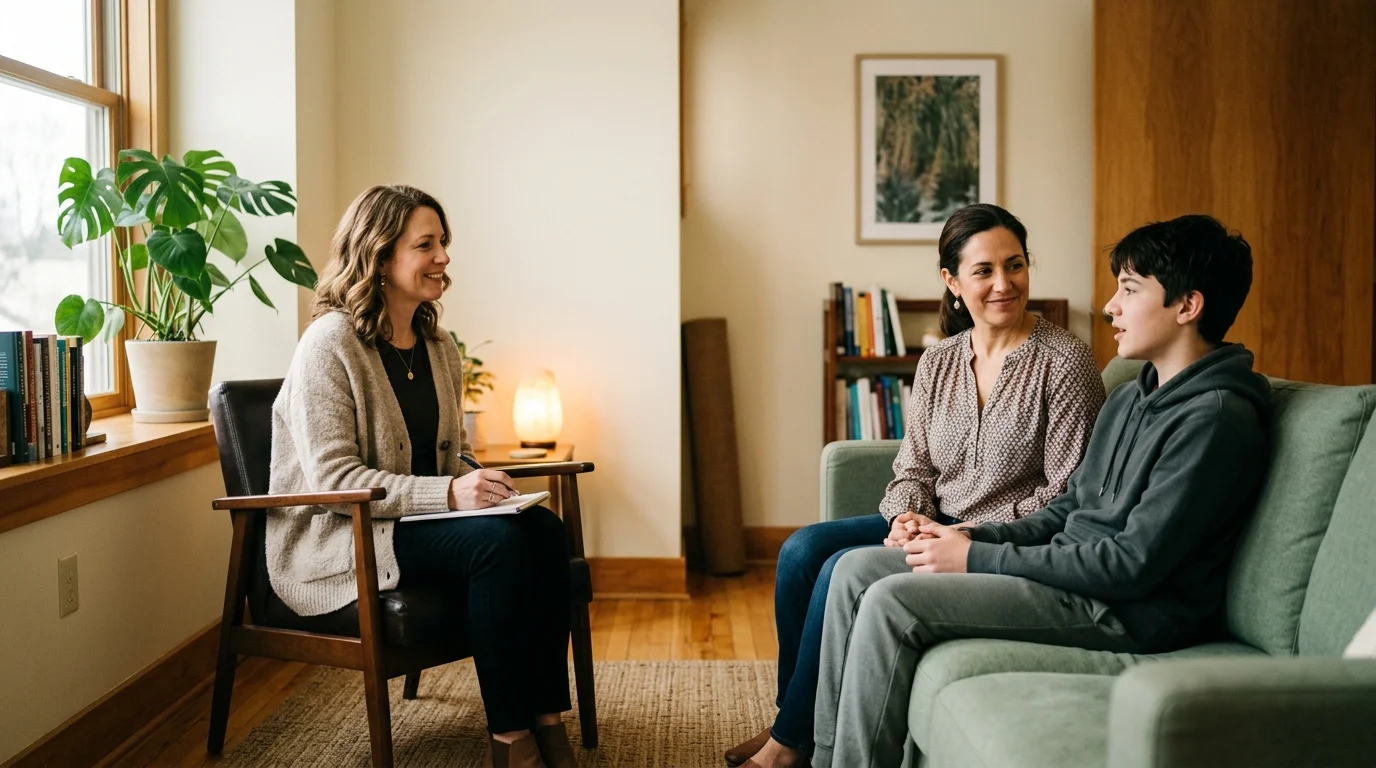
A lot of parents imagine family therapy as sitting in a circle while everyone yells and cries and the therapist takes notes. That’s not what it is.
Good family counseling is structured, purposeful, and — most of the time — surprisingly productive. Here’s what you can actually expect.
The First Session: Assessment, Not Interrogation
Your therapist’s job in early sessions is to understand the whole system — not to find out who’s at fault. They’ll ask about history, about patterns, about what each person in the room actually needs. Everyone gets to be heard, including your teenager.
Many families report feeling relieved after the first session. Not because anything is fixed, but because they finally said the things out loud that had been circling the house for months.
Building Communication Skills That Actually Work
One of the core tools in family therapy is communication restructuring. That means learning how to have hard conversations without them turning into fights — how to stay regulated when someone says something that lands wrong, how to listen in a way that the other person actually feels heard.
These skills sound simple. In practice, they’re hard. A family therapist gives you the scaffolding to practice them safely before you try them at home.
The Sherpa Approach: Walking Beside, Not Ahead
At Sherpa Group, our name isn’t accidental. Sherpas are guides who’ve walked difficult terrain — they carry weight alongside you, they know where the path goes, and they don’t pretend the climb is easy. That’s how we see our role with families.
We’re not here to tell you what kind of family you should be. We’re here to help you find your way through the terrain you’re actually in.
How Long Does It Take?
The American Association for Marriage and Family Therapy reports that the average course of family therapy is around 12 sessions — and that 98% of clients report receiving good or excellent help, with 93% saying they have more effective tools to deal with their problems after treatment. Family therapy tends to be focused and time-limited, not open-ended indefinitely.
That said, every family is different. Some find meaningful resolution in 8 sessions. Others come back periodically as new seasons of life bring new challenges — a college transition, a divorce, a diagnosis. The goal is always to give you skills you can use long after therapy ends.
The Summer Factor: Why Right Now Matters
If you’re reading this near the end of the school year, here’s something worth knowing: summer often surfaces family tension that the school schedule was masking.
When your teenager is home all day — no routine, more screen time, more proximity, more friction — struggles that were manageable during the school year can escalate quickly. Starting family therapy before summer gives your family a foundation to work from before the pressure rises.
Raleigh, Wake Forest, and Cary families dealing with academic pressure, social-media-driven anxiety, and the particular isolation of Triangle suburbs know this pattern well. The end of the school year is one of the most common times families finally reach out — and one of the best times to start.
Finding the Right Family Therapist in Raleigh and Wake Forest
Knowing you need help and finding the right help are two different things. Here’s what to actually look for.
Look for Systemic Training, Not Just General Counseling
Not every therapist is trained to work with families. Family therapy is a distinct specialty — it requires training in systemic approaches, group dynamics, and how to hold multiple people’s realities in the room at once.
Look for therapists with licensure or training in marriage and family therapy (MFT), or who have specific post-graduate training in family systems approaches like ABFT, Structural Family Therapy, or Emotionally Focused Family Therapy.
Adolescent Experience Matters
Working with teenagers is its own skill set. Teens don’t respond to therapy the way adults do. A therapist who is warm and effective with adults may struggle to earn the trust of a 16-year-old who was dragged to therapy against their will.
Ask directly: how much of your practice is working with adolescents? What approaches do you use when a teenager is resistant or shut down?
Location and Logistics
Consistency matters in therapy. A therapist 45 minutes away in heavy Triangle traffic is harder to get to every week — and missed sessions slow progress. If you’re in Wake Forest, Rolesville, Youngsville, or north Raleigh, finding a therapist closer to home makes follow-through easier.
Sherpa Group is based in Wake Forest, with easy access for families across the Raleigh metro. We work with families from all over the Triangle — and we know the community you’re raising your kids in.
Start the Conversation
You don’t have to have everything figured out before you reach out. Contact us and we’ll help you figure out whether family therapy, individual teen therapy, or a combination is the right starting point for your family. That first conversation is free and carries no obligation.
FAQ: Family Counseling Raleigh
How is family counseling different from teen therapy alone?
Individual teen therapy focuses on helping your teenager develop insight, coping skills, and emotional processing — it’s one person working on their own inner world. Family counseling brings the whole system into the room. The therapist works on communication patterns, relational dynamics, and the ways family members are unintentionally contributing to — or being harmed by — the struggle. For many issues, especially those involving behavior, relational conflict, or safety concerns, family therapy is more effective than individual therapy alone because it addresses the environment the teenager returns home to after every session.
How much does family counseling cost in Raleigh, and does insurance cover it?
Family therapy session rates in the Raleigh area typically range from $120 to $200 per session, depending on the provider’s licensure level and specialty. Many insurance plans do cover family therapy when there is an identified client (usually the teenager) with a mental health diagnosis — but coverage varies significantly by plan. We recommend calling your insurance company before your first appointment to ask specifically about coverage for “family psychotherapy” (CPT code 90847). Sherpa Group can provide documentation to support insurance claims. If cost is a barrier, ask about sliding scale options when you reach out.
How many sessions does family therapy usually take?
The American Association for Marriage and Family Therapy reports an average of 12 sessions for family therapy. In practice, this varies a lot depending on the complexity of what the family is working through. Some families feel meaningfully better in 8 sessions; others dealing with longer-standing patterns or co-occurring individual mental health diagnoses may work together for 6 months or more. The goal is never to keep you in therapy longer than you need — it’s to give you tools that work and a family that functions better without ongoing support.
Can family counseling help if my teenager refuses to participate?
Yes — and this is one of the most important things parents don’t realize. Parent coaching and parent-focused family therapy can create significant change even when a teenager won’t come into the room. When parents shift how they respond, communicate, and hold boundaries, the family dynamic changes — and teenagers often become more willing to engage over time. That said, if safety is a concern, we’ll talk through the most appropriate level of care for your specific situation. Don’t let a resistant teen stop you from reaching out.
Do you offer family therapy in Wake Forest or only Raleigh?
Sherpa Group is located in Wake Forest, which puts us conveniently close for families in Wake Forest, Rolesville, Youngsville, and north Raleigh. We serve families from across the Triangle — including Raleigh, Cary, Durham, and surrounding areas. If you’re not sure whether our location works for your family, reach out and we’ll figure it out together. We also offer some telehealth options for families within North Carolina.
What’s the difference between family counseling and reunification therapy?
Family counseling is a broad term for therapeutic work involving multiple family members — it encompasses many approaches and goals, from communication improvement to crisis intervention. Reunification therapy is a specific, court-ordered process designed to rebuild the relationship between a child and an estranged parent, typically in the context of divorce or custody proceedings. It has a formal structure, often involves documentation for legal purposes, and follows specific protocols. If you’re looking for reunification therapy specifically, ask providers directly whether they have training and experience in that specialized area — it’s distinct from general family counseling.
Taking the First Step
If you’ve read this far, you already know your family needs something to change. That awareness — as uncomfortable as it is — is the starting point for every family we’ve worked with.
You don’t have to have the perfect words when you call. You don’t have to know exactly what kind of help you need. You just have to take one step.
Family therapy works. The research is clear, and so is what we see in our practice. Families who show up, even imperfectly, even reluctantly, find their way to something better. Not perfect — better. Closer. Able to have the hard conversations without the house falling apart.
That’s what’s possible. And it starts with a conversation.
Reach out to Sherpa Group today to schedule a free consultation. We’ll talk through what your family is experiencing and help you figure out the right next step — whether that’s family therapy, individual teen work, or a combination of both.
You’ve been carrying this long enough. Let’s figure out the path forward together.